Encounter and Participation
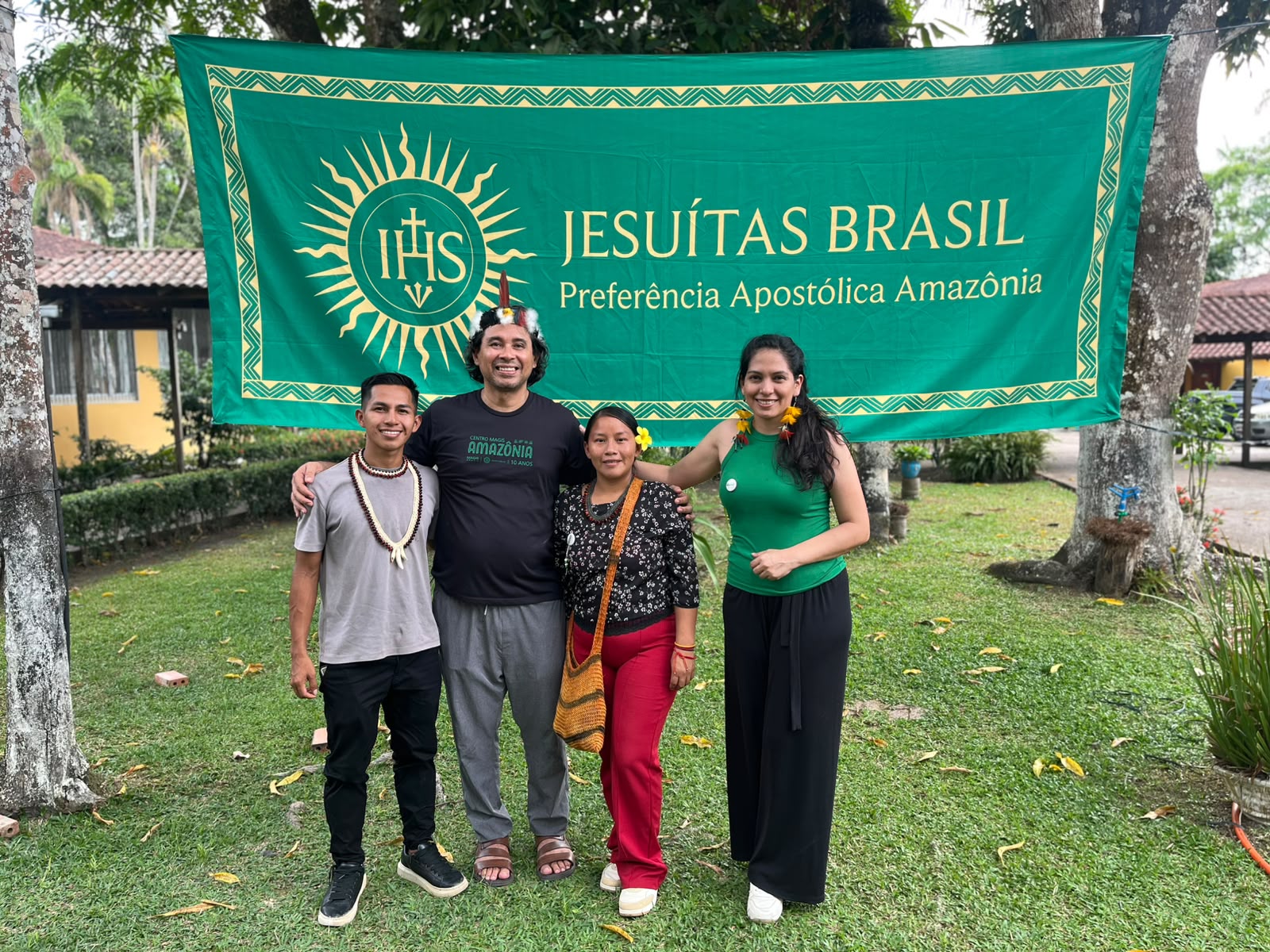
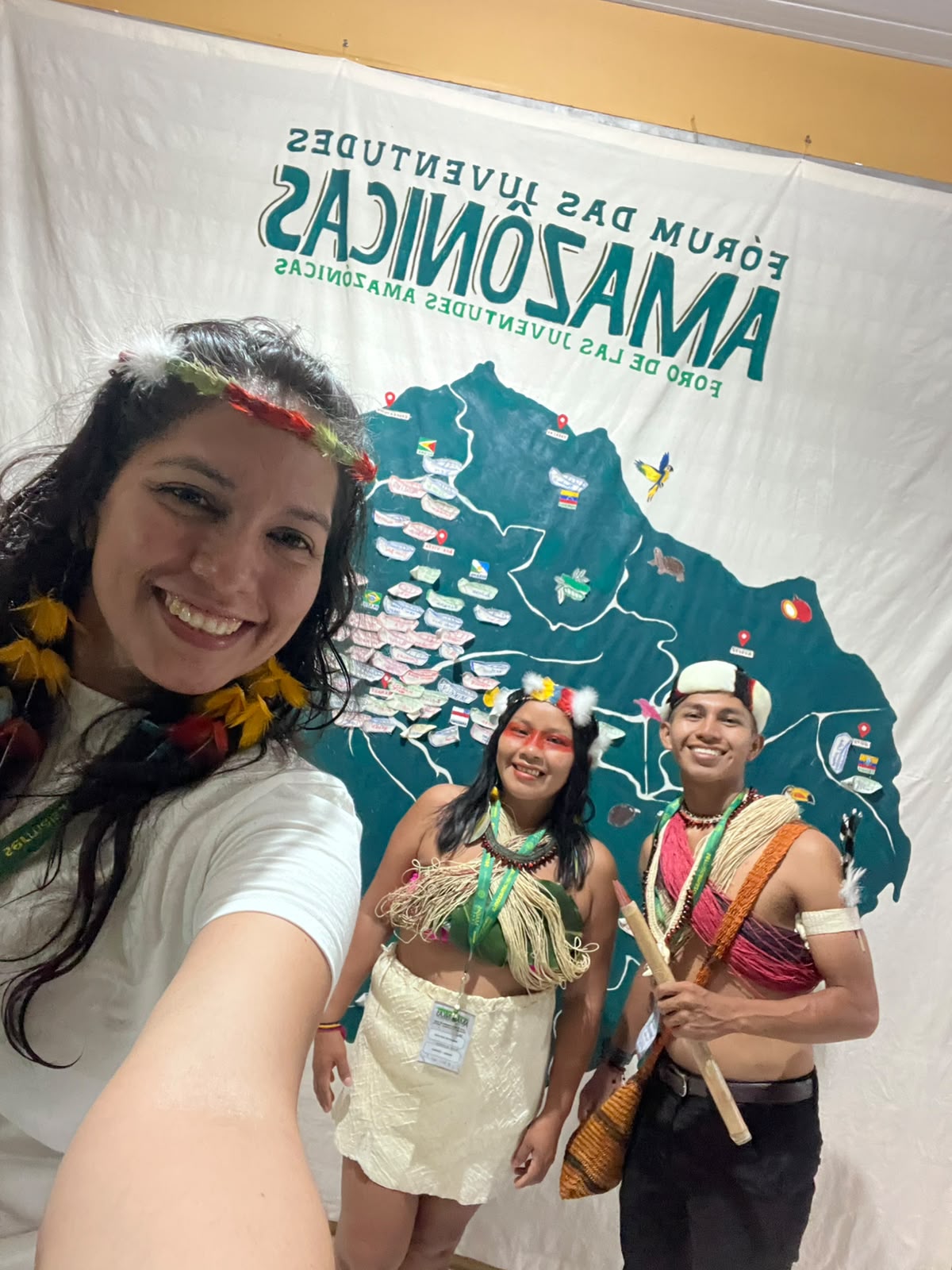
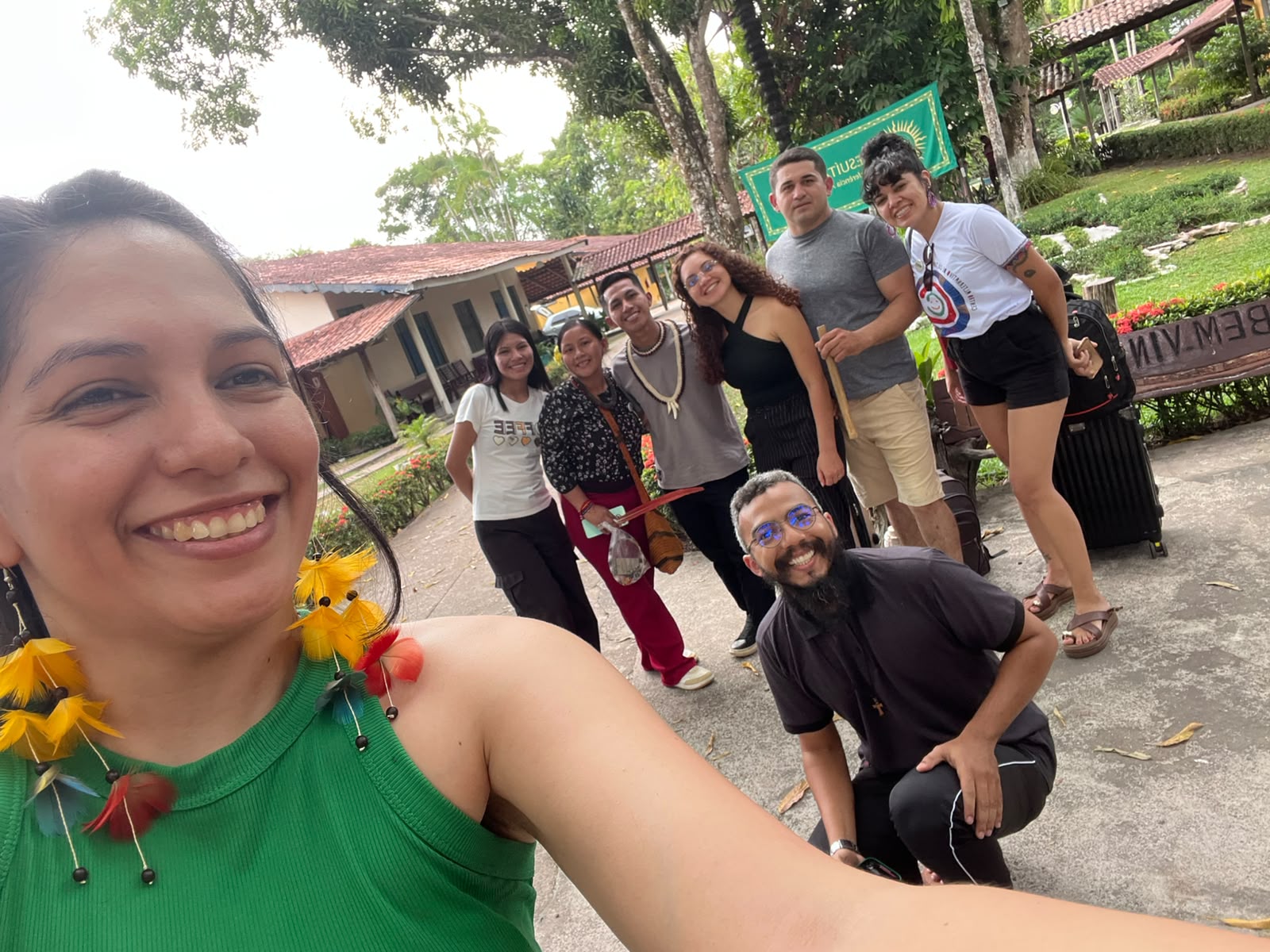
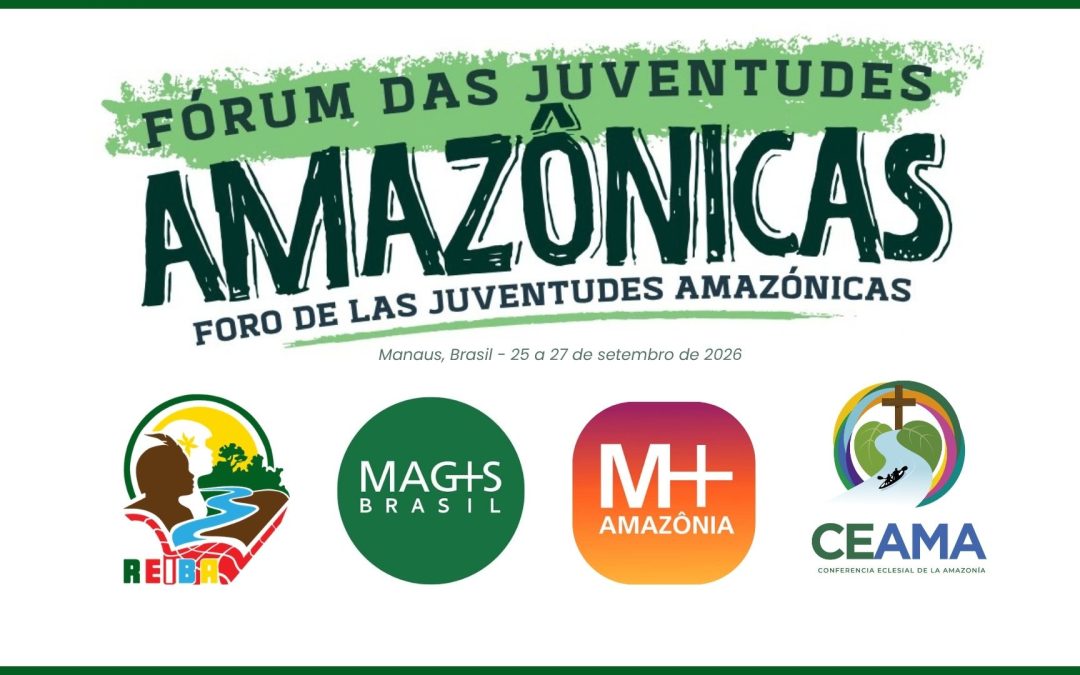
From September 25 to 27, the Ir. Vicente Cañas Retreat House (Manaus, Brazil) hosted the III Amazonian Youth Forum. The event was organized by MAGIS Amazônia (Society of Jesus – Jesuits / Brazil).
CEAMA (Ecclesial Conference of the Amazon) was present through:
Ana Gabriela Jimenez, coordinator of Amazonian Intercultural Bilingual Education – REIBA
Maycol Coba and Maritza Caigua, young people from the Waorani indigenous community (Ecuador) who are currently being accompanied in understanding Spanish as a second language by the advisor of REIBA’s Thematic Formative Encounters, Sandra Robilliard.
This historic space marked the first time the forum included the participation of youth from another country outside of Brazil. This demonstrated that the Amazon has no borders and that its territory is a single whole composed of great diversity.
During the working groups of the first two days, participants presented the realities and issues of their regions:
- Urban and general context: Abandonment of or forced attendance at catechesis; weakening of the family core; inappropriate use of technology, alcoholism, and drug addiction; lack of training for adults who accompany youth, and a shortage of spaces for youth advocacy.
- Rural and indigenous context (contributed by the Waorani youth): Extractivism and illegal mining; water pollution caused by oil companies; kidnapping of individuals and the introduction of alcohol induced by outsiders.
A Methodology of Listening and Collective Construction
After each working day, participants gathered in an assembly to share what they had heard at the different tables. This exercise allowed them to collectively build a matrix of realities and contexts. The objective was not limited to diagnosis; the space served to think about and propose concrete, viable actions aimed at mitigating and reducing the identified problems.
The forum thus consolidated itself as an invitation not only to share and reflect, but to unite ideas with the firm purpose of bringing them back to the territory to give continuity to the process.
Cultural Night: Sharing, Music, and Fraternity
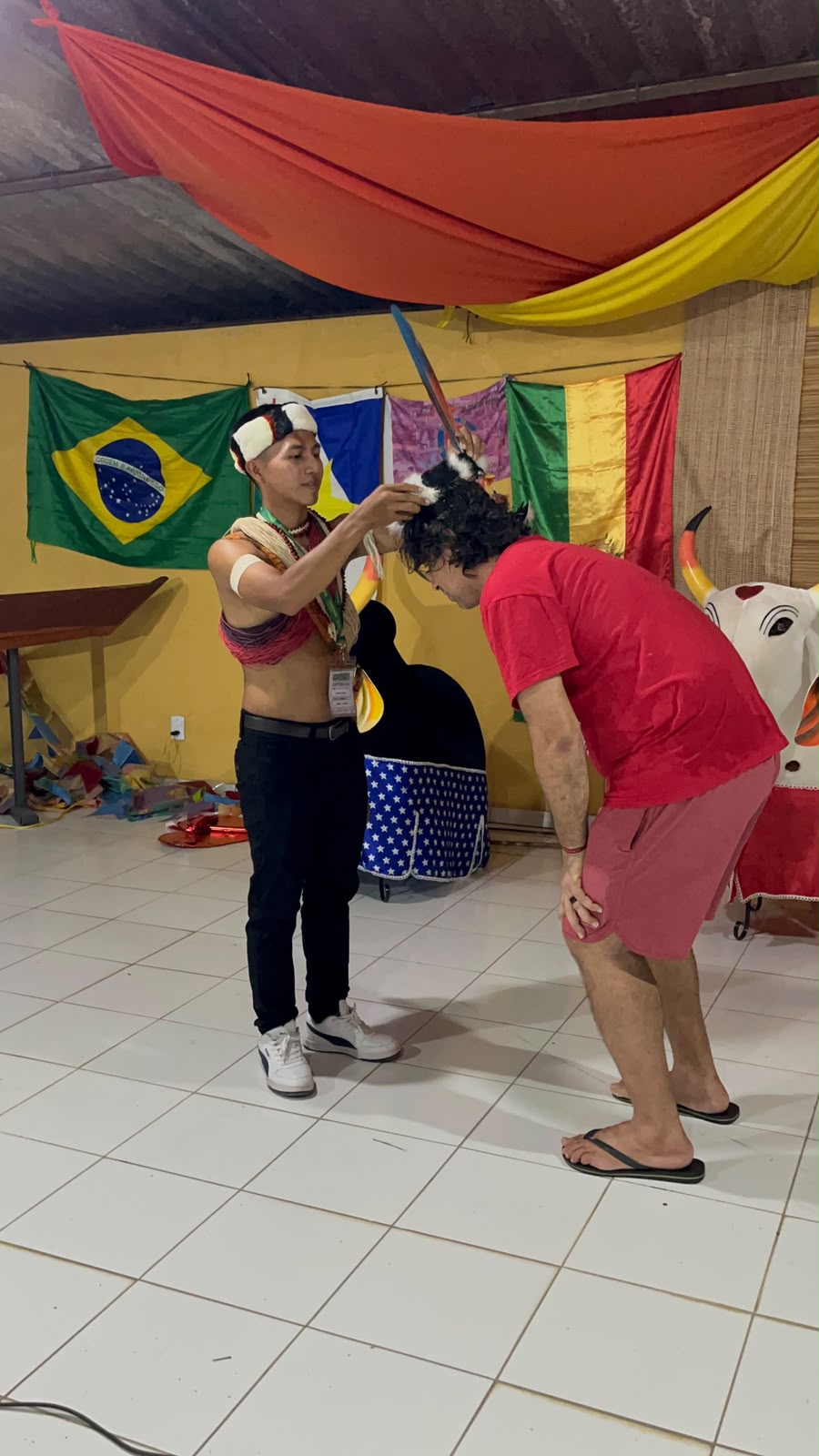
Beyond the schedules of the working groups, the forum opened a space for shared life through a cultural night. This informal moment of celebration allowed participants to experience youth fully through music, food, and close conversation. Participants were able to taste the traditional cuisine of various Amazonian territories and enjoy diverse artistic presentations by youth from pastoral spaces.
Among them, the participation of Maycol Coba stood out; he shared his musical gifts by singing two songs of his own authorship and a cover in his native language, Waotededo.
These spaces of coexistence deeply encourage the Church to look closely at the interests of youth, discovering what motivates them and what they are passionate about, as Pope Leo XIV constantly requests.
Participants reflected on youth identity in the region:
- It is a life of a community nature, far from individualism.
- It maintains ancestral knowledge to preserve culture and identity.
- It uses technology positively to acquire training, exchange experiences, and propose joint solutions.
Commitments and Proposals of CEAMA-REIBA
To generate a greater impact and reduce problems, the coordination of methodologies with demonstrable results is key. From CEAMA, through REIBA, concrete actions will be promoted:
- Five training modules to strengthen pastoral and educational processes (moving from text to context).
- Ecological calendar to understand the behavior of our «common home» and its four life spaces.
- Foundations for the inculturation of the gospel to introduce those from the outside to the Amazonian world, according to the experience of each territory.
- Development of inculturated IBE (Intercultural Bilingual Education) material to achieve a real connection and understanding from one’s own identity in the face of multinationals present in the Amazon.
- Linguistic revitalization so that new generations recover the diversity of languages and knowledge against commercialism and exclusionary globalization.
- CLIL methodology (Content and Language Integrated Learning) to help educational leaders teach new languages starting from native languages.
- Spanish as a second language to break the language barrier that prevents many young people, whose mother tongue is their native language, from accessing higher education or connecting with pastoral groups that have Spanish as their mother tongue.
Call to Unity and Gratitude
It is time to join forces among all networks and organizations working in the Amazon. This avoids duplicating themes and resources, and builds a great network for exchanging experiences and methodologies.
From CEAMA and REIBA, we reaffirm our willingness to continually listen to local churches to promote these encounters of mutual aid in the care of the Pan-Amazon region.
We appreciate the invitation and hospitality of the Society of Jesus during these valuable days of listening. May God, with His Holy Spirit and following the example of Saint Ignatius of Loyola, grant us to love and serve in everything.